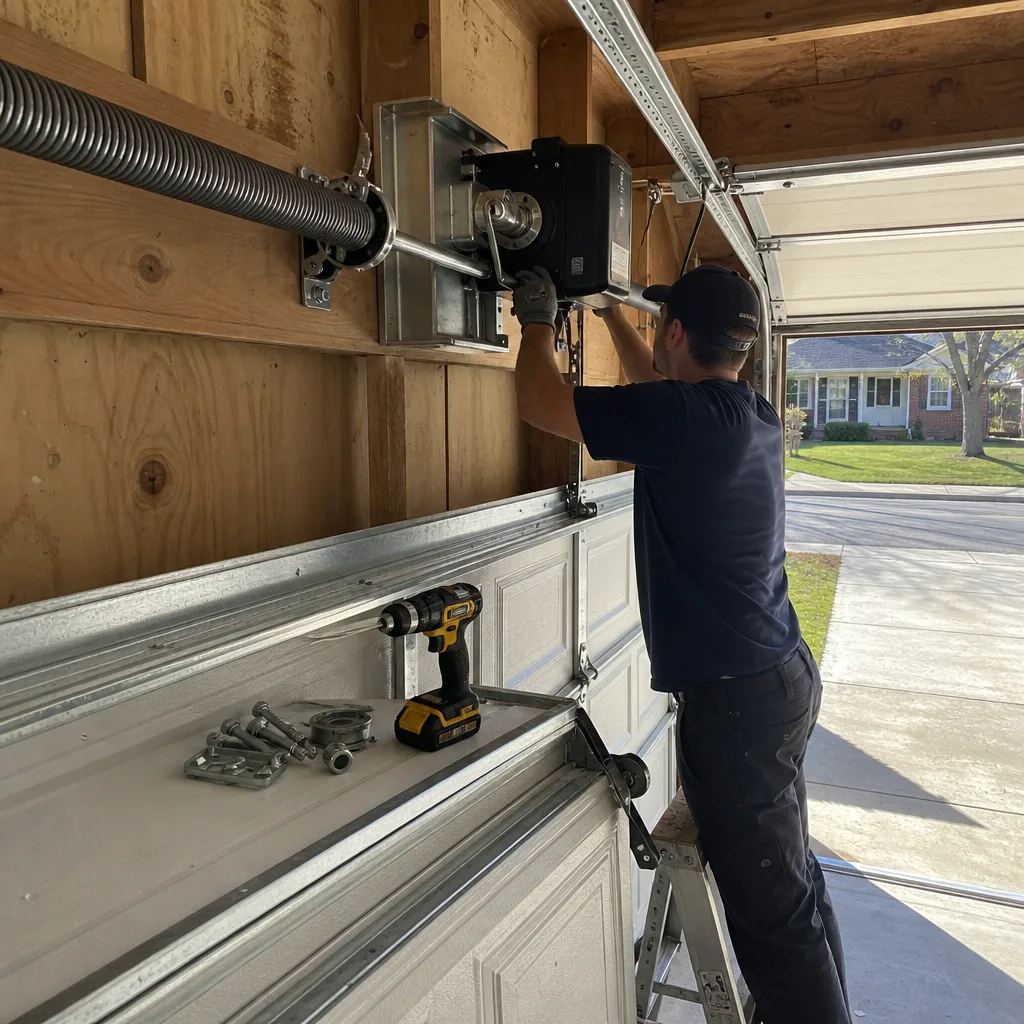
Last updated November 22, 2026
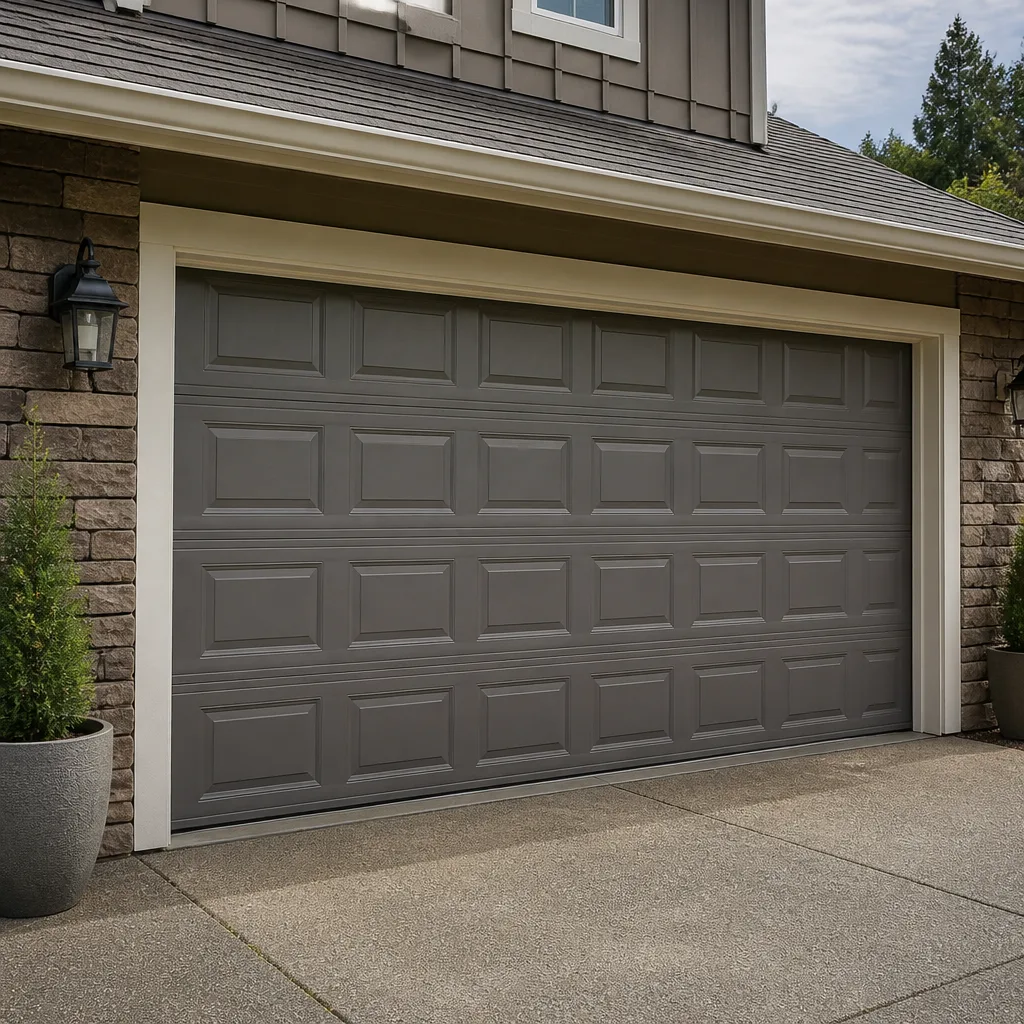 Raised-panel steel
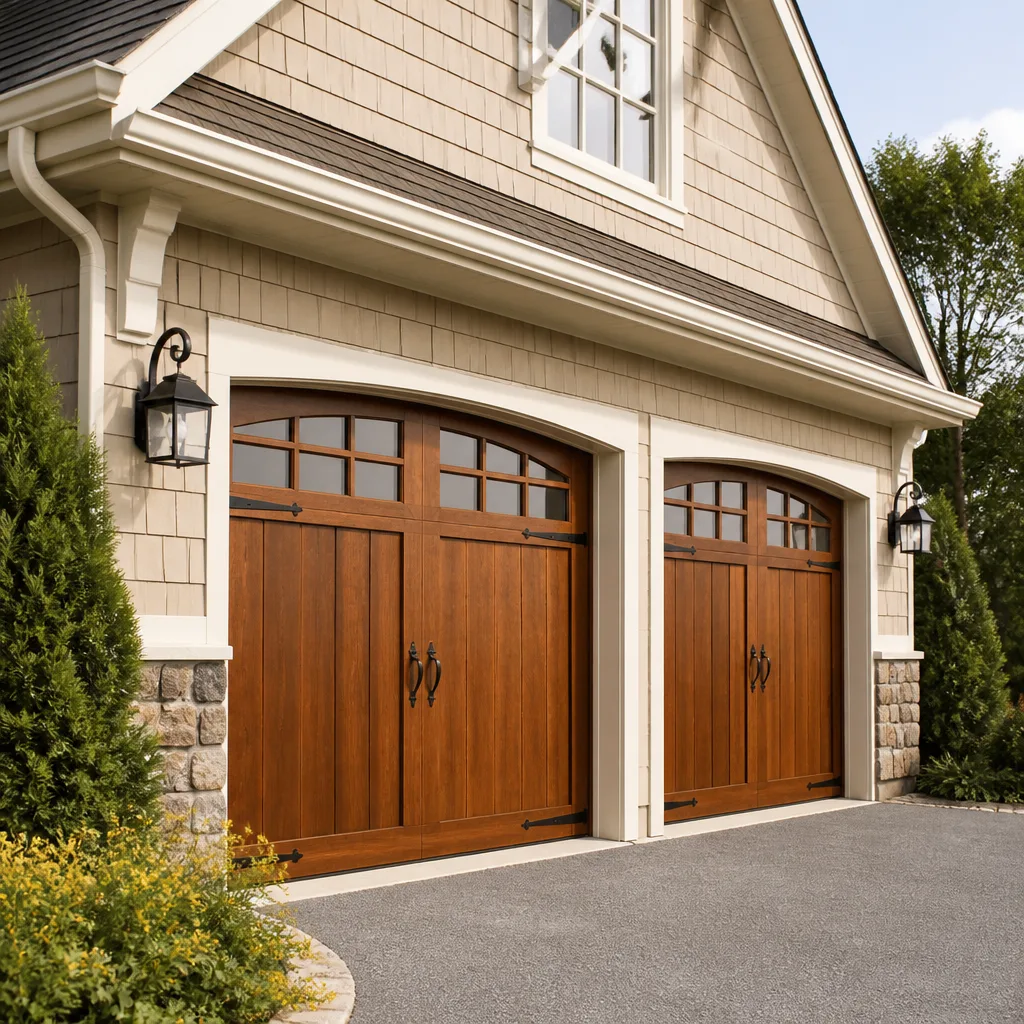 Carriage house
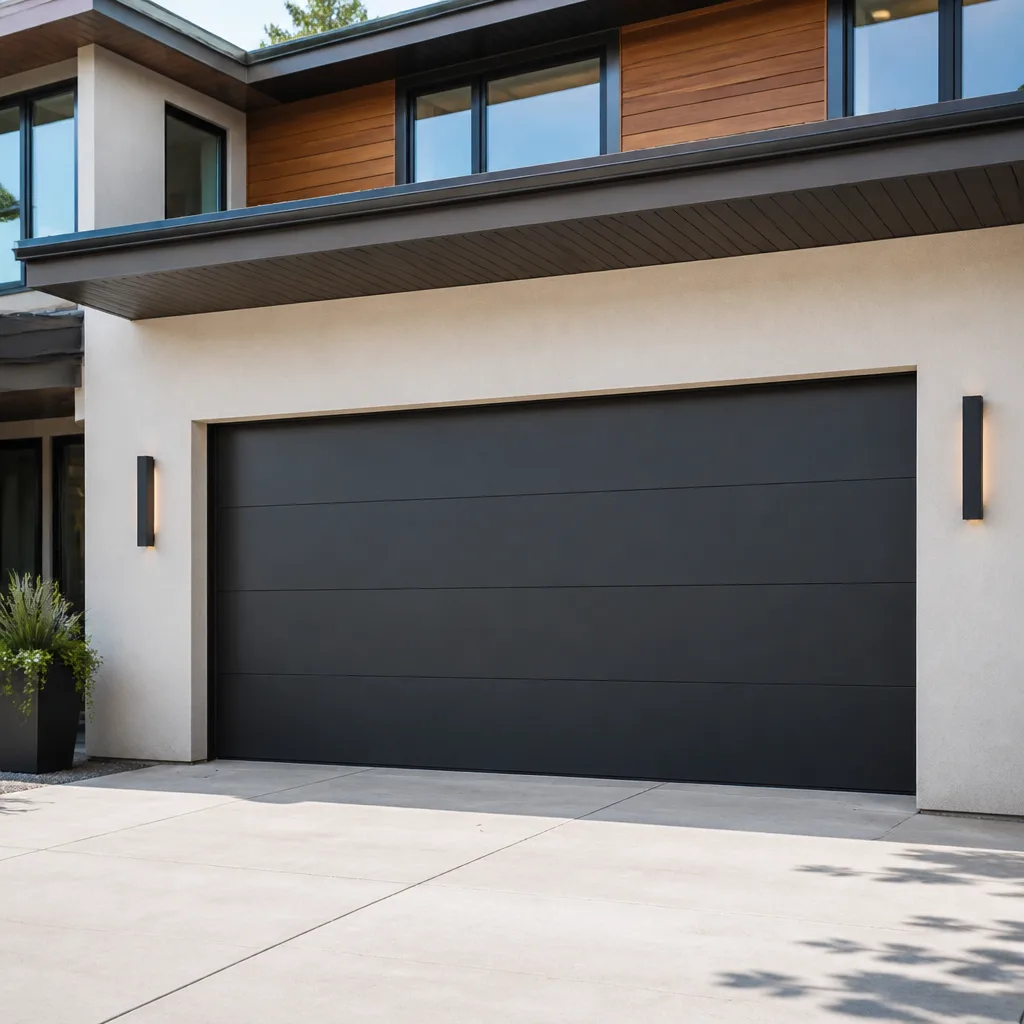 Modern flush
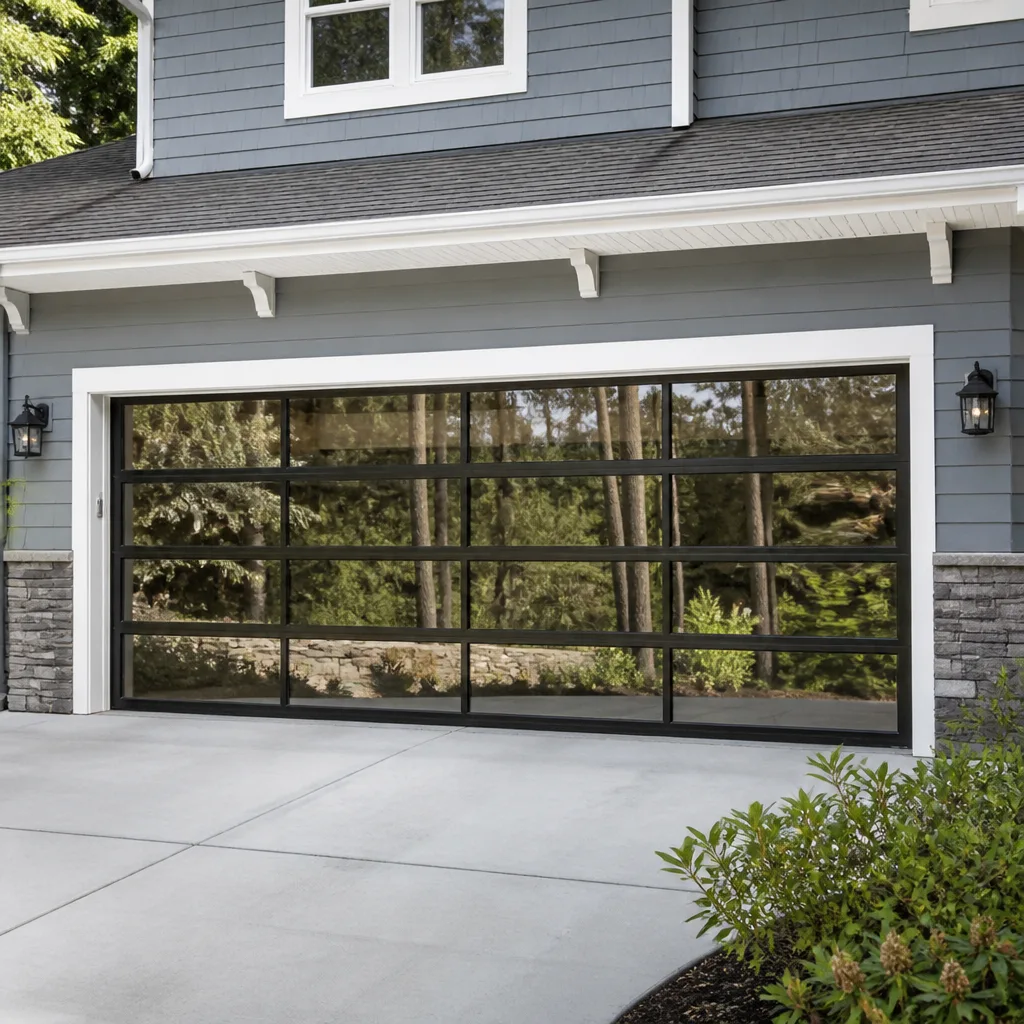 Full-view glass
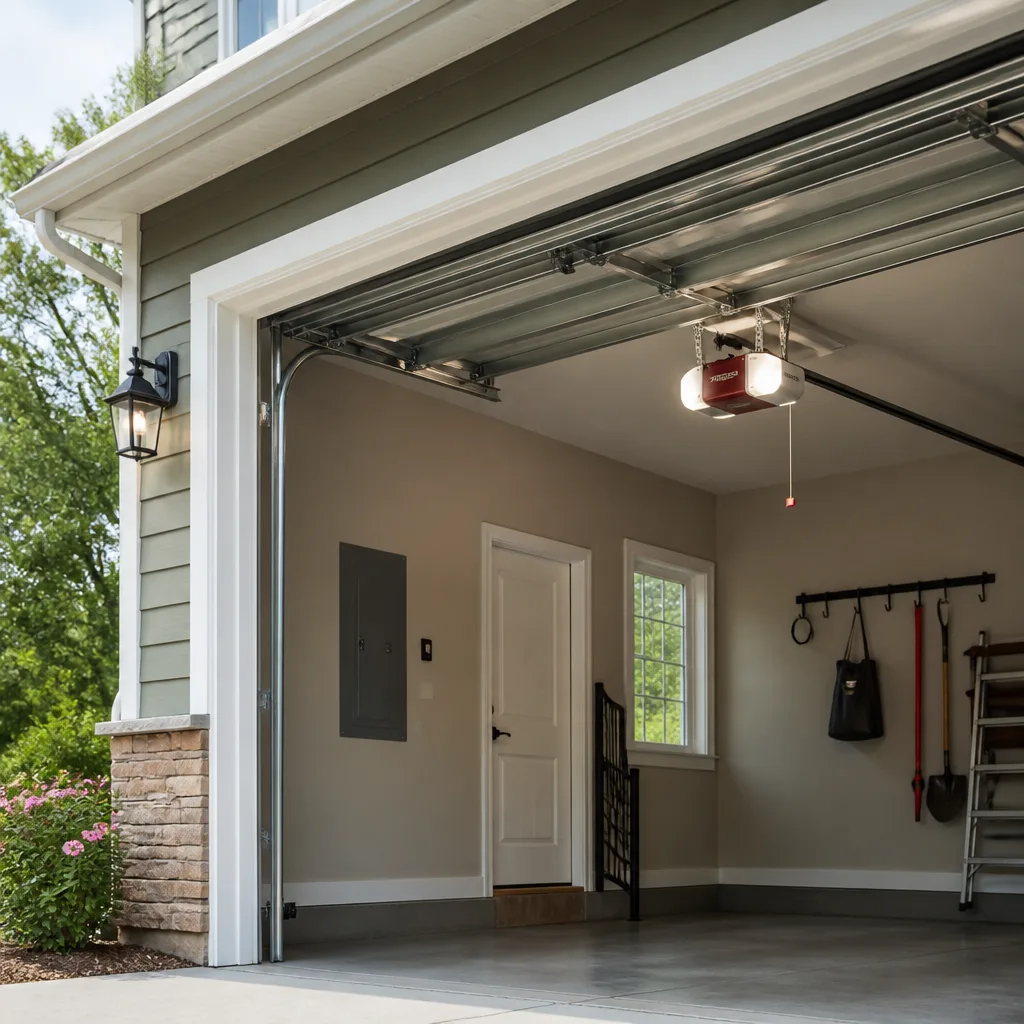 LiftMaster openers
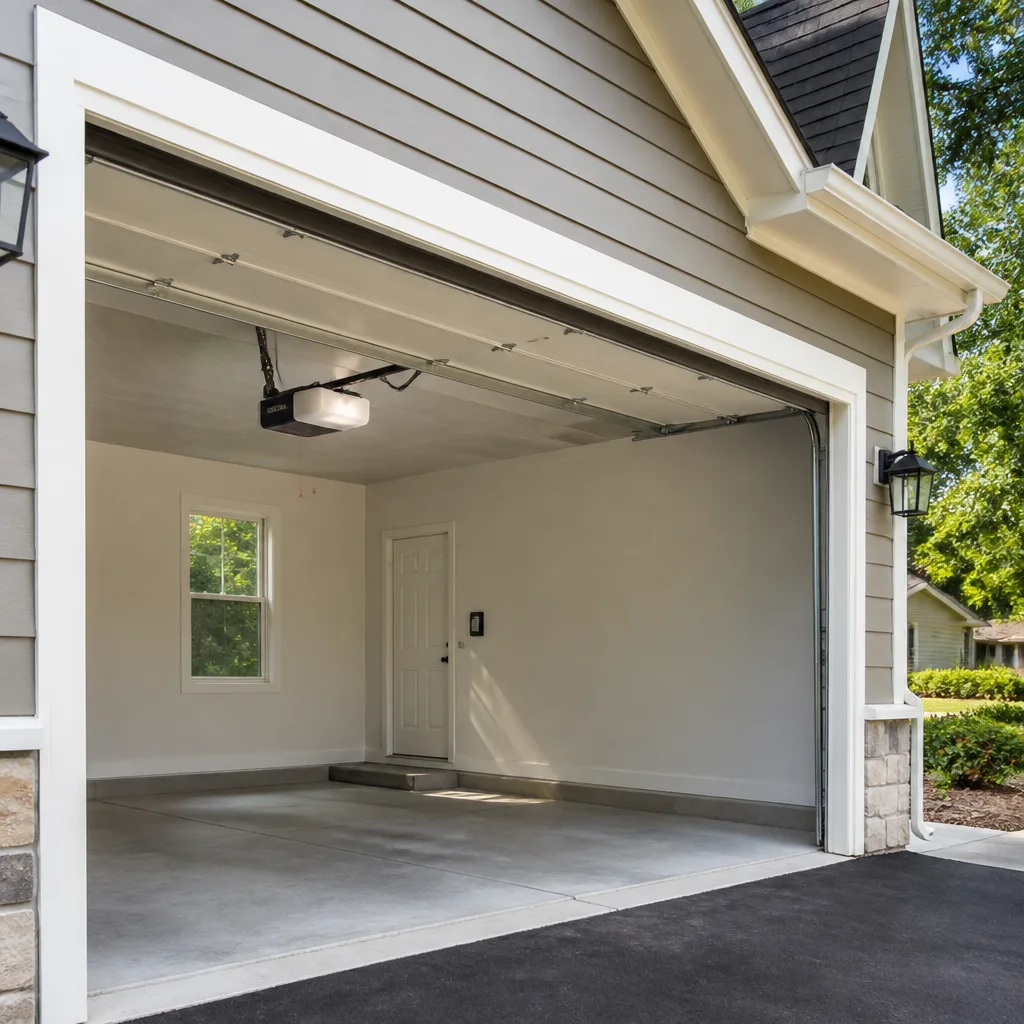 Chamberlain openers
Full 25-point door and opener safety check with every visit - springs, cables, rollers, tracks, and your LiftMaster or Chamberlain opener included
You get a price before we start. It does not change when the pro arrives.
Get your free estimateDIY vs Professional Garage Door: The Alexandria Homeowner’s Decision Guide
Here’s the part most DIY garage door guides skip: the question isn’t whether you’re handy enough to fix your door. It’s which specific task you’re doing. Torsion spring replacement is the most-searched garage door DIY job and the one most likely to send an Alexandria homeowner to the emergency room, because a fully wound torsion spring stores enough energy to kill someone, and “go slow” is not a safety protocol. Swap a bottom seal and you’re fine. Touch a spring or a loaded cable and the math changes completely. This guide breaks the whole system down task by task, so you know exactly where the safe line sits in your own Alexandria garage.
Quick Answer
DIY garage door work makes sense for sensor alignment, remote reprogramming, weatherstripping and cosmetic swaps. It does not make sense for torsion springs, cable replacement or any track work done under tension, because those carry serious injury risk, can void manufacturer warranties, and may leave you exposed on your Virginia homeowner’s policy if something fails later. When a spring, cable or track is involved in Alexandria, call a professional.
Styles & brands we work with
- Raised-panel steel
- Carriage house
- Modern flush
- Full-view glass
- LiftMaster openers
- Chamberlain openers
Table of Contents
- The Task-by-Task Breakdown: What’s DIY-Safe and What Isn’t
- Why Springs and Cables Are a Hard No
- Warranty Voiding: What Chamberlain, Clopay and Amarr Specify
- Virginia Liability: When Your Homeowner’s Insurance Steps Back
- The Real Cost Comparison, Tools Included
- Where DIY Genuinely Works
- What Alexandria Weather Does to Your Door
- Why Brand Familiarity Matters More Than You’d Think
The Task-by-Task Breakdown: What’s DIY-Safe and What Isn’t
Garage door repair isn’t one skill. It’s a group of tasks with wildly different risk profiles, and treating them as a single category is where homeowners get hurt. Here’s how we’d sort them, based on the calls we run in Alexandria and what a typical job actually involves.
Genuinely DIY-safe tasks
- Safety sensor alignment. If the door reverses or won’t close, the photo-eye sensors near the floor are often knocked out of line. Straightening the brackets and checking that the indicator lights are solid takes a few minutes and no tools beyond a screwdriver.
- Remote and keypad reprogramming. Lost a remote or changed a code? Most LiftMaster, Chamberlain and Genie openers have a learn button that makes this a ten-minute job with the manual in hand.
- Weatherstripping and bottom seal replacement. A worn bottom seal lets rain, cold air and pests in. Slide the old one out of the retainer and the new one in. No tension, no risk.
- Lubrication and hardware checks. A garage door lubricant on rollers, hinges and the torsion bar (not the tracks) quiets a noisy door. Tightening loose bolts is fine as long as you’re not loosening anything under load.
- Cosmetic panel swaps. Replacing a single dented panel on a sectional door is a bolt-off, bolt-on job, as long as the panel isn’t carrying spring tension and matches your model.
Tasks that belong to a professional
- Torsion and extension spring replacement. The single most dangerous job in the trade.
- Cable replacement. Cables hold the door’s weight. A frayed cable that snaps under load is a genuine hazard.
- Track realignment under tension. A bent track on a loaded door is not something to bend back by feel.
- Opener logic board or motor failure. Diagnosis requires knowing the specific unit, and swapping parts blindly gets expensive fast.
- Panel replacement on a door with broken springs. Cosmetic only when the door is balanced and closed. Otherwise it’s a two-person, load-bearing job.
If you take nothing else from this guide, take this: the line isn’t between “easy” and “hard.” It’s between “no stored energy” and “stored energy.” Cross that line in your Alexandria garage and you’re betting on your own reflexes.
Why Springs and Cables Are a Hard No
A torsion spring is a coiled steel bar that holds the entire weight of your door in tension. When it’s properly wound, it’s storing enough force to lift a door that weighs well over a hundred pounds. When it breaks, that force releases in an instant. When someone inexperienced tries to wind a new one, that force is pointed wherever they’re standing.
We get it. A spring replacement video makes it look like a two-winding-bar job and a few grunts. What the video doesn’t show is that a torsion spring requires a specific winding count based on the door’s height, weight and drum size, and that a bar slipping out of a wound spring is a catastrophic event, not a bruised-knuckle event. That’s why spring repair sits explicitly on our menu as a specialty. Not because it’s a high-margin upsell, but because it’s the job where a generalist can genuinely hurt someone.
Signs you should not touch the spring yourself
- A loud bang from the garage (a broken spring sounds like a gunshot and usually happens when the door is down).
- The door feels extremely heavy when you lift it by hand, or won’t stay up.
- A visible gap in the coiled spring above the door.
- The door goes up a foot and stops.
- The door slams down when you release it halfway.
All of these point to a spring or cable failure. Don’t cycle the door repeatedly to test it. Leave it closed, park elsewhere if you can, and call. garage door repair for a broken spring is usually a same-day fix once a technician is on site.
Warranty Voiding: What Chamberlain, Clopay and Amarr Specify
Here’s a factor that almost no DIY guide mentions, and it’s the one that turns a “cheap” repair into an expensive one. Major manufacturers write their warranties around professional installation and service. Chamberlain, Clopay and Amarr all publish warranty terms that assume the door or opener was installed by a qualified technician and serviced according to the manual. Improper installation, unapproved modifications, and DIY work that damages the system are typically excluded.
What that means in practice: if you swap a spring yourself and get the winding wrong, you can stress the drums, the cables and the center bearing. The door works for six months, then a drum fails. When the warranty claim goes in, the manufacturer asks who did the work. If the answer is “I did,” you’re on your own for a repair that costs more than the original spring job would have.
It’s not a scare tactic. It’s a contract term you agreed to when you bought the door or opener. Clopay’s sectional door warranties and Amarr’s residential warranties both hinge on correct installation, and Chamberlain’s opener warranties do the same. A professional spring or opener repair from a company that works on those exact brands keeps your coverage intact. A DIY repair can quietly end it.
Virginia Liability: When Your Homeowner’s Insurance Steps Back
This is the part nobody wants to think about, but it’s the strongest argument against a DIY spring or cable repair in Alexandria. Your homeowner’s policy is built to cover accidents. It is not built to cover a repair you did yourself that later fails and causes damage or injury.
Under Virginia law, a homeowner who does their own work on their property generally owns the consequences of that work. Translate that into garage door terms:
- If a DIY spring replacement fails and the door drops onto a car, a pet or a person, the injury or damage is on you.
- If a door you repaired yourself later falls and the insurer finds the failure traced to improper work, a claim can be denied on the basis that the loss resulted from your own unqualified repair.
- If a visitor is injured by a door you fixed, your liability exposure on the property is real, and questions about who did the work will come up.
We’re not lawyers and we’re not your insurance agent, so check your own policy language. But in our experience, this is the question Alexandria homeowners ask too late, after the door has already fallen. The simplest way to keep the coverage clean is to have the spring, cable or track work done by someone insured for it. A licensed, insured professional carries their own liability for the work. You don’t.
The Real Cost Comparison, Tools Included
Let’s be honest about what a DIY repair actually costs in Alexandria, because the parts price on the box is only one line of the real budget. A torsion spring costs far less as a part than a professional replacement, but the picture changes when you account for what you’d need to do the job and what goes wrong when it does.
| Task | Typical DIY cost | Typical professional estimate |
|---|---|---|
| Safety sensor alignment | $0 (screwdriver) | Call-out minimum if booked alone |
| Remote reprogramming | $0 to cost of a new remote | Minimal, often bundled with another service |
| Bottom seal replacement | Seal cost plus a few tools | Seal plus labor |
| Weatherstripping (full perimeter) | Material cost plus basic tools | Material plus labor |
| Torsion spring replacement (single spring) | Spring cost plus winding bars, clamps, safety gear, and the cost of a failed attempt | Typical estimate from a specialist, quoted before work starts |
Two things are missing from the DIY column that never make it into the video: the specialized tools, and the failure cost. A proper torsion spring job requires winding bars rated for the load, a proper set of C-clamps, and correct springs matched to your door’s weight and cycle life. Those tools cost more than the spring and sit in your garage forever after one use. If the first attempt damages a drum or a cable, you’re paying for those too.
The professional side isn’t free, but it’s one number. Any reputable Alexandria garage door company quotes the job before anyone touches the door, so you know the total before the work starts. The written estimate is the price. Nothing changes when the technician gets on site and finds the extra thing. If it does, you get a call before anyone proceeds. That predictability is the actual product you’re buying.
When you’re ready, a free estimate costs nothing and tells you exactly where you stand. The final price is always set by the written estimate, not an estimate on the phone. garage door installation pricing works the same way: measured, quoted in writing, then scheduled.
Where DIY Genuinely Works
We’re not going to pretend every garage door problem needs a truck in the driveway. Some jobs are genuinely fine for a careful homeowner, and doing them yourself saves a call-out. Here’s where we’d spend the time ourselves.
- Sensor alignment when the door won’t close. Look at the two photo-eye sensors near the floor on either side of the door. Each should have a solid indicator light, not a blinking one. If one is blinking, loosen the wingnut and nudge the bracket until the light goes solid. Test the reversal function by waving a broom across the beam while the door closes. If it doesn’t reverse, stop and call.
- Remote or keypad reprogramming. Grab your opener manual (or search the model number), press the learn button on the motor housing, and press the remote within the window the opener gives you. This solves most “my remote stopped working” calls in a few minutes.
- Bottom seal replacement. The bottom seal slides into a retainer on the door’s lowest panel. Pull the old seal out one end and feed the new one in. It’s a two-hour job for a single door and needs no mechanical aptitude.
- Weatherstripping around the frame. The trim around the door frame is a simple nail-on or adhesive job. It’s not the bottom seal; it’s the frame seal. Replacing it cuts drafts and keeps rain out during a Virginia summer storm.
- Cosmetic panel swap. If a single panel is dented and the door is balanced and closed, a like-for-like panel swap is a bolt-off, bolt-on job. Match the model, not just the color.
- Opener battery and logic board troubleshooting. Before you call, check the wall control, swap the battery in the remote, and try the manual release. If the opener hums but doesn’t move, or the lights blink a code, note the code and call. That diagnostic work saves a technician time and gets you a faster fix.
Notice that none of these involve a spring, a cable or a track under tension. That’s the whole point.
What Alexandria Weather Does to Your Door
Alexandria sits in a climate that bounces between humid summers and freezing winters, and a garage door lives through every swing of that. Humidity swells wood panels and works on steel hardware, which is why we see more sticking rollers and rusted hinges in Alexandria than homeowners expect. Winter freeze-thaw cycles push on the bottom seal and can leave it cracked and leaking by spring. Summer storms drive rain under the door if the seal is worn, and that water finds its way to the frame and the floor.
None of this is dramatic, but it’s cumulative. A door that hasn’t been lubricated in a few years fights its opener harder each season, and a struggling opener wears out faster. The cheap maintenance here is annual: lubricate the moving parts, check the bottom seal, tighten the bolts, listen for new noises. If a noise shows up in the spring, it’s usually a sign something let go over the winter. That’s the moment to get the door looked at rather than run it for another six months.
We also see what a lot of Alexandria homes have in common: older detached garages, doors that have been there a long time, and openers from a previous decade still chugging along. Those systems aren’t fragile, but they deserve a look. A quick inspection in spring catches a spring that’s about to go rather than one that goes on a Sunday morning. garage door opener repair on an aging unit is often a matter of replacing a worn gear or a capacitor, not the whole opener.
Why Brand Familiarity Matters More Than You’d Think
Garage doors and openers are not interchangeable parts. A Chamberlain opener and a Genie opener are built differently, report error codes differently, and use different logic boards. A Clopay or Amarr sectional door has its own panel profile, spring engineering and hardware. If a technician shows up and has to guess at the system in your garage, you’re paying for their diagnosis time and you’re rolling the dice on whether they get it right.
Our technicians work on the brand already in your garage. That’s a short list of eight: LiftMaster, Chamberlain, Genie, Clopay, Amarr, Wayne Dalton, Craftsman and Raynor. It’s not that other doors don’t exist. It’s that these are the systems in the majority of Alexandria homes, and pattern recognition across thousands of doors makes a difference when the symptom is vague. A door that reverses for no reason on a Chamberlain opener points to one set of causes. The same symptom on a Genie points elsewhere. Knowing the system in advance means a faster diagnosis and the right part on the first visit.
“Garage doors, only” is a phrase we use deliberately. We don’t do kitchen remodels, plumbing or handyman work. Every service we offer, from spring repair to opener service to emergency response, lives inside one trade. The trade has its own tools, its own safety rules and its own manufacturer relationships. That focus is what lets us diagnose the system, not just the symptom, and it’s what separates us from a multi-trade company that treats a door as one of forty things on a truck.
Common Mistakes to Avoid
- Forcing a stuck door with the opener. If the door won’t lift easily by hand, the opener won’t fix it. Running the motor against a locked door strips the gear and turns a spring job into a spring-and-opener job. Stop, disconnect the manual release, and find out why it’s stuck.
- Reaching for a screwdriver on the track. A bent track looks adjustable. It’s not, when the door is under tension. Forcing a track back into place can throw the door off its rollers and turn a small problem into a large one. This is exactly the scenario where a professional belongs.
- Buying a spring off the part number alone. Springs are matched to the door’s exact weight and the cycles you want from them. The wrong spring works for a few weeks, then the door is unbalanced and fights the opener every time it moves. In Alexandria’s humidity, that also shortens the life of the rollers.
- Ignoring a small dent or a slow seal until it costs more. Alexandria’s freeze-thaw cycle pushes on a worn bottom seal until it fails outright. A cheap seal in October is a wet garage floor in March.
- Reprogramming the remote before checking the sensor. Half the “my remote doesn’t work” calls we see are actually a sensor misalignment. The remote is fine; the door refuses to close. Check the sensor lights first.
- Assuming a manufacturer warranty covers DIY work. It usually doesn’t. If a warranty matters to you, keep the work professional and documented.
- Running a door on a broken spring “just once.” Every cycle of a door with a broken spring loads the remaining spring and the cables harder than they’re designed for. “Just once” is how a second spring fails and a cable lets go.
See the difference
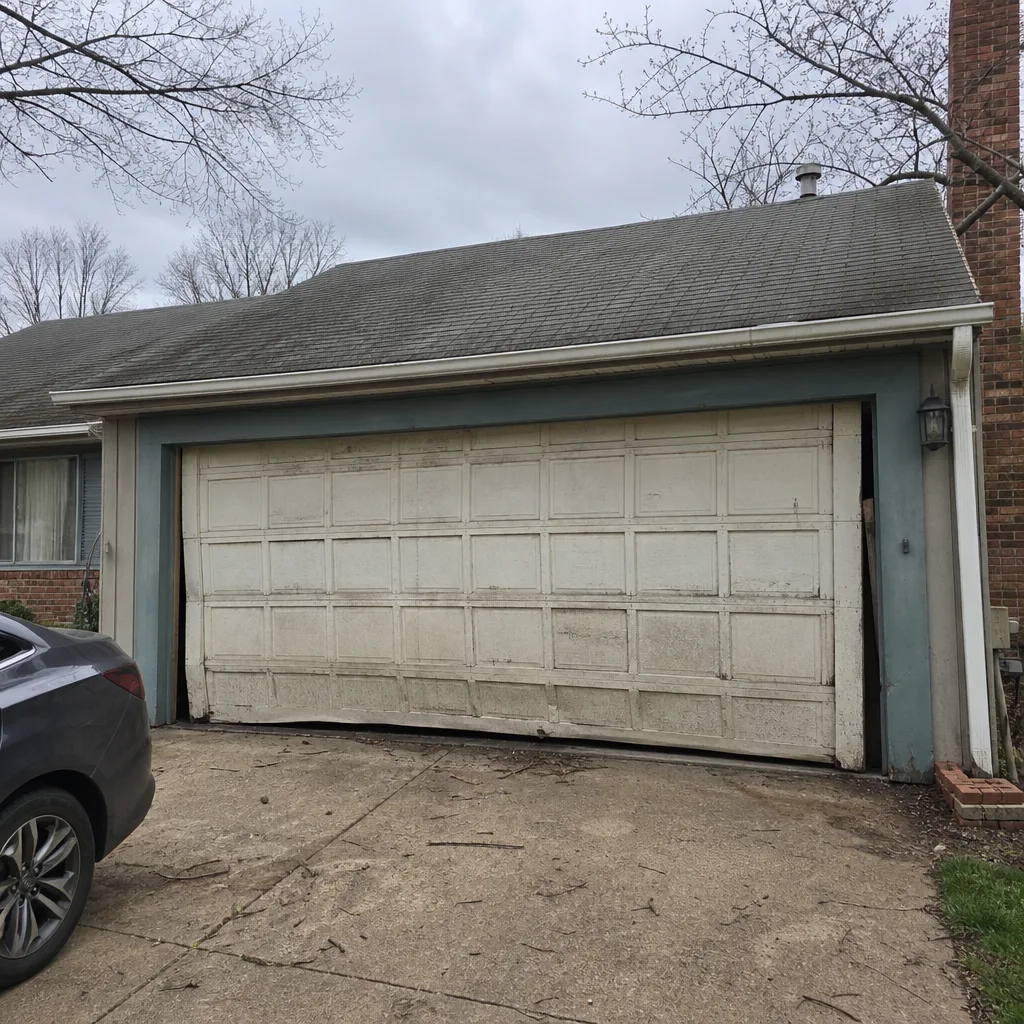 Before
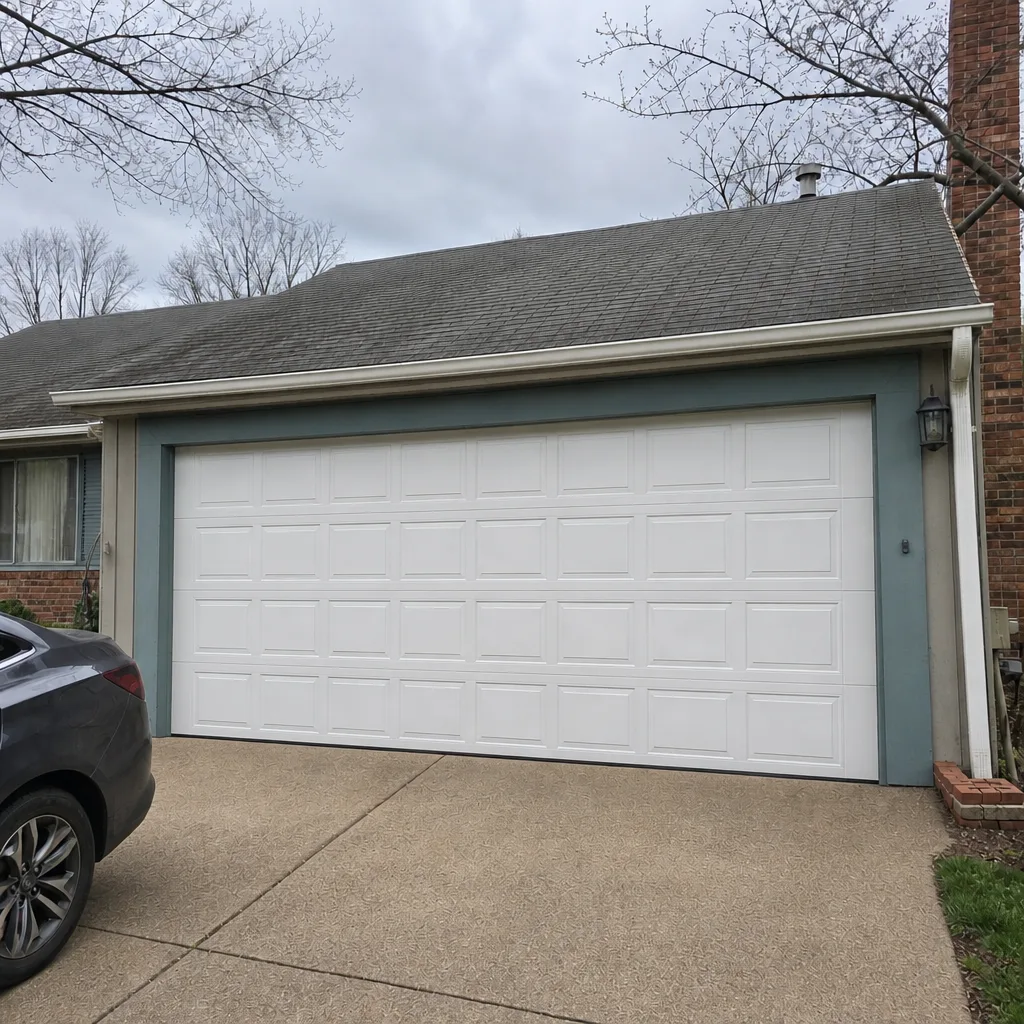 After
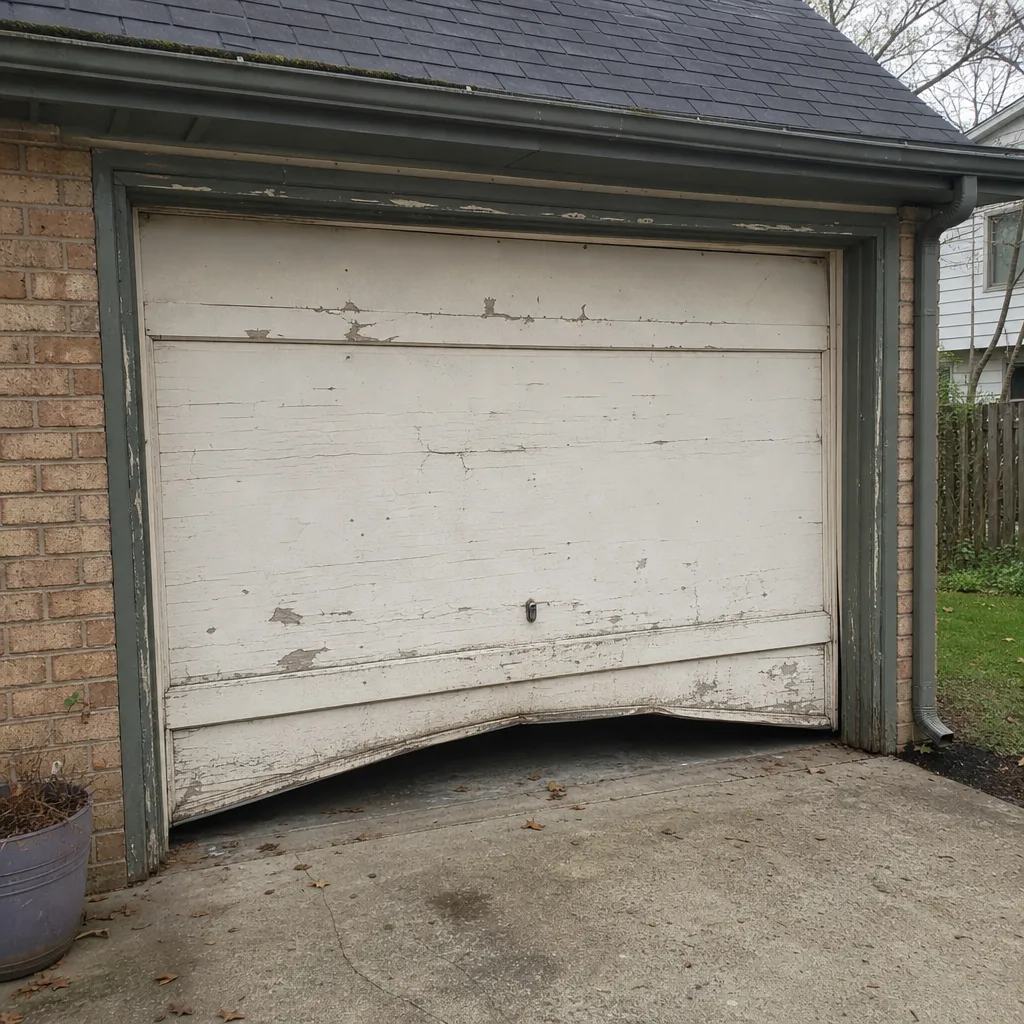 Before
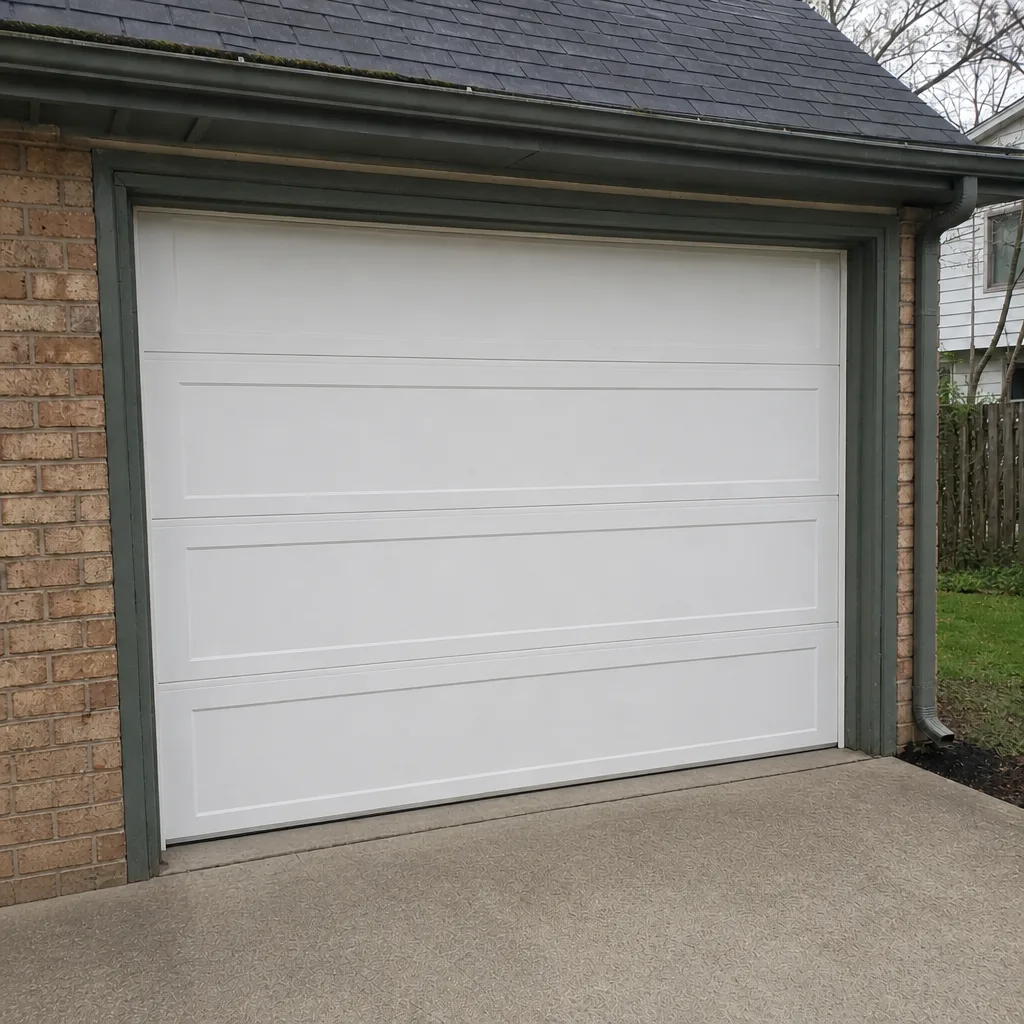 After
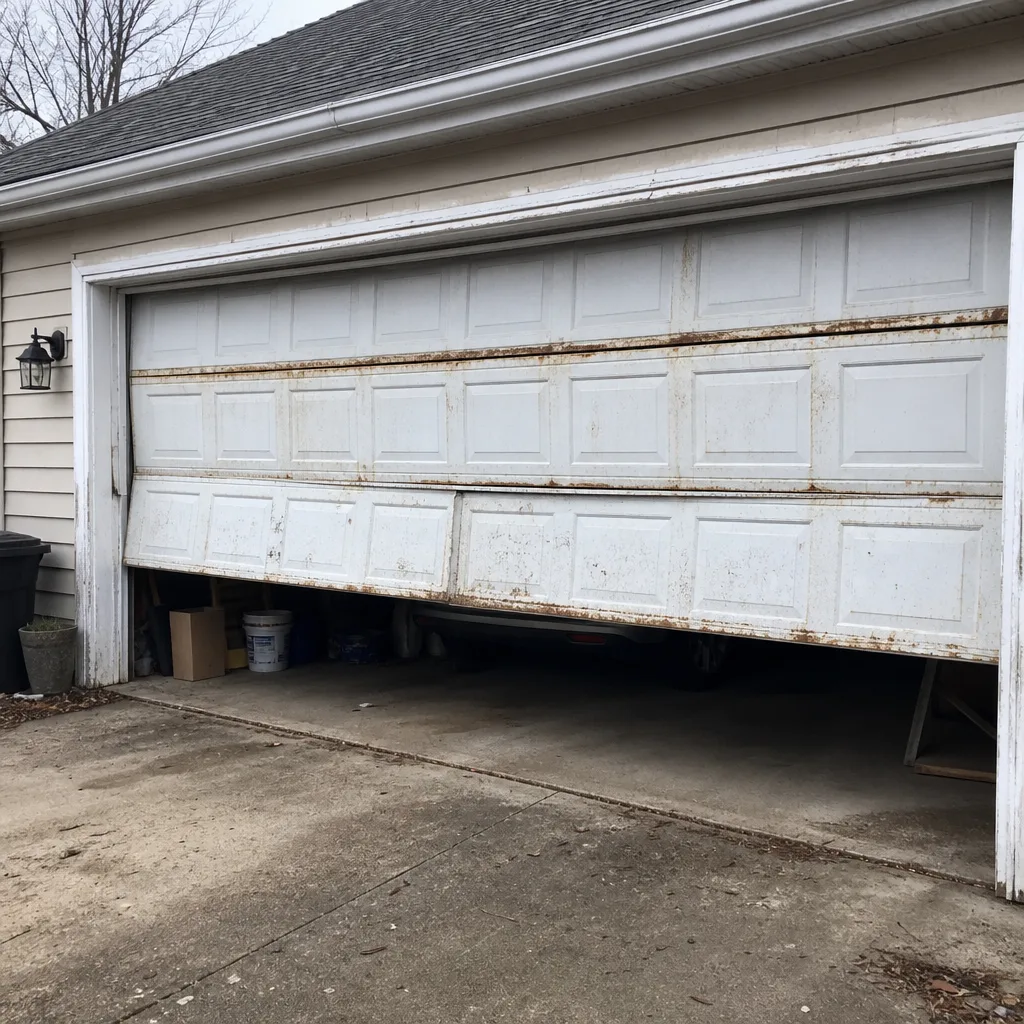 Before
 After
When to Call a Professional
Call a professional when the door has a broken spring, a snapped or frayed cable, a track that’s bent or out of alignment under load, or an opener that hums, trips a breaker or moves the door erratically. Call when the door reverses without a clear cause, slams down, or feels dangerously heavy. Call when the door has been damaged in a storm and you don’t want to find out the hard way whether the frame is still square.
And call when the door needs to open today. When your door won’t open or close, we come now, because a garage door that’s stuck open is a security problem and one stuck closed traps your car. Those are the calls where a DIY attempt costs more than it saves.
Alexandria Garage Door Repair Pros offers free estimates in Alexandria. Our technicians have up to 12 years of experience, we work on the brand already in your garage, and the price is quoted and agreed before any work starts. Call (877) 379-9603.
Frequently Asked Questions
No. A torsion spring stores enough energy to cause fatal injury when it releases, and there is no safe way to wind one without professional training and the right rated tools. If your spring is broken, leave the door closed and call for same-day spring repair rather than attempting it. Call (877) 379-9603 for a free estimate.
It depends on the part that failed. Spring replacement, cable replacement, opener service and panel swaps each carry a different estimate, and that’s why we quote in writing before any work begins. Call (877) 379-9603 with your door’s brand and model and we’ll give you an honest range, then confirm it in writing on site.
Often, yes. Manufacturers including Chamberlain, Clopay and Amarr tie their warranties to professional installation and service, and DIY work that damages the system can fall outside coverage. If your door or opener is still under warranty, keep the work professional and keep the paperwork. Call (877) 379-9603 and we’ll tell you what’s covered.
Yes. When your door won’t open or close, we treat it as an emergency, because a stuck door is a security and access problem rather than a cosmetic one. Call (877) 379-9603 and we’ll book you for the soonest available visit, with a price agreed before any work starts.
In many cases, yes. A repair you did yourself that later fails and causes damage or injury is generally your responsibility under Virginia law, and insurers can decline a claim traced to unqualified work. Check your own policy language, and when in doubt, have the spring or cable work done by someone insured for it. Call (877) 379-9603 for a free estimate.
Almost certainly. We work on LiftMaster, Chamberlain, Genie, Clopay, Amarr, Wayne Dalton, Craftsman and Raynor, and every technician we send is a garage door specialist rather than a generalist. Call (877) 379-9603 with your model and we’ll confirm coverage before you schedule.
The Bottom Line
The DIY vs. professional question for your garage door has a clear line, and it isn’t about your confidence. It’s about stored energy. Sensors, remotes, seals and cosmetic panels are genuinely fine to handle yourself, and doing so saves a visit. Springs, cables and tracks under tension belong to a trained technician who works under their own insurance and knows your brand. Weigh the tool cost, the warranty terms and the liability exposure against the price of a professional repair and the math usually favors the professional once anything under tension is involved. When in doubt in Alexandria, call and ask. We’re happy to tell you it’s a DIY job if it is.
Alexandria Garage Door Repair Pros is a garage door specialist serving Alexandria homeowners with repair, opener service, installation, spring repair and emergency response. Free estimates, upfront pricing, and the written quote sets the final price.
Call (877) 379-9603 for a free estimate today.
Written by the team at Alexandria Garage Door Repair Pros.